
Inspirational Thought for Today
Hope is here for me every day
We've Moved!
- Center Point Healing7309 Baltimore Avenue
Suite 120
College Park, MD 207401-301-277-9020 Hours
MonClosedTue10:30 am – 6:00 pmWed10:30 am – 6:00 pmThu10:30 am – 5:30 pmFri9:00 am – 4:00 pmSat9:00 am – 4:00 pmSunClosedI work alternate Fridays and Saturdays.
- Testimonials
I heard about Susan at Center Point Healing from a Doctor for natural medicine all the way in Florida. I was in so much pain all over from my neck down. Taking 1,000 mg of Tylenol daily for two months. I have always been a healthy eater. My para thyroid was out of balance and I was told that that it had to be removed surgically. A friend told me about trying Natural medicine and Acupuncture. It has been a
... Read more »Elizabeth is an outstanding acupuncturist. I saw her two years ago for specific physical problems and am continuing to work with her as I address larger life issues. As a movement analyst and teacher, I admire the effective blend of professional skills and personal qualities that Elizabeth brings to her work; and, as a patient, I deeply appreciate the results. Her ability to be warmly receptive and genuinely present with me, and at the same time to also be keenly
... Read more »Elizabeth is WONDERFUL! I have been seeing her for a little over one year. As she promotes on her website, she is present with you and where you are. She loves her practice, is kind and smart and funny and oh-so-caring about your situation without breaching any professional boundaries. Elizabeth has soft hands and a very gentle touch. She is one of the MAJOR BLESSINGS in my life. Her office is a calm oasis and I look forward to EVERY
... Read more »Elizabeth is truly a gem. I have struggled with an auto-immune disease for about six years. After meeting so many “challenging” people in the medical community, she is a HUGE breath of fresh air. She genuinely cares, and she simply knows what she is doing.
I have felt much better, and my “western” doctors have been amazed with my standard progress-according-to-blood-tests. She is not extreme or out there, but securely down to earth and logical. And I can’t emphasize her
... Read more »It is with a very high praise that I recommend Elizabeth Fellows to you, I have had in the past, some experience with acupuncture and I can say that working with Elizabeth has been a pleasure, and her competence in this field has been demonstrated to me in the course of my treatments. She not only has demonstrated a high degree of technical competence but also her willingness to be present during all of my treatments as a fully human
... Read more »I love Center Point Healing. I have been a patient here since April 2007. From the time I first walked through the doors at Center Point Healing, Elizabeth Fellows has made me feel as if I was her only patient. Before she begins treating you , she sits with you each visit from approximately five minutes and discuss your issues, symptoms, your week’s major points, and/or whatever is on your mind. With this information she tailor’s your treatment to what
... Read more »Elizabeth Fellows is a wonderful acupuncturist. She has helped me with several health issues as well as just gaining a feeling of general well-being. My treatment times have been the most relaxing time of the week for me.
S.M., Springdale, Maryland
Elizabeth provides great service. She asks questions to ascertain any medical issues you have and really listens to what you say. Her treatment plan is holistic and I can say that the overall quality of my health has improved. I will continue to use her services.
S.B., Hyattsville, Maryland
Acupuncture has been a godsend to my life. Prior to coming to you for treatment, I was one of the biggest skeptics around. I had been on medication after medication and even tried herbal teas and foot soaks but nothing has compared to the relief that I’ve gotten from acupuncture treatments. Though I have a long way to go, I would rather do it safely and this has proven to be just that. Your positive and caring attitude has taken
... Read more »I have been seeing Elizabeth for over a year. She is a highly intuitive, thoroughly professional practitioner. Her office is warm and inviting. Her acupuncture treatments have served me well in many ways, physically and emotionally.
There have been a number of immediate improvements to my well being along the way, and the long term benefits have been remarkable. I would highly recommend her.
P. S., Hyattsville, Maryland
Like us on Facebook!
Follow Us!


Latest Articles:
- • Outdoor Activities Best Enjoyed During Spring •
- • The Health Benefits of Spring Cleaning •
- • Delicious Recipes Using Spring Fruits and Vegetables •
Acupuncture
Alternative Treatment for IBS
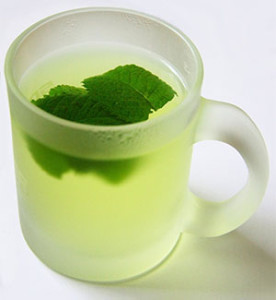 Irritable Bowel Syndrome (IBS) is a common disease suffered by an estimated 25-45 million people in the United States. Symptoms include chronic abdominal pain, bloating, excess gas and irregular bowel movements. Symptoms can be brought on by a number of triggers including anxiety, insomnia and stress. Although there is no known cure to IBS, there are numerous alternative treatments to prescription medication that can help relieve symptoms. continue reading
Alternative Treatments for Fertility
 About 10 percent of couples struggle with infertility and an inability to conceive, according to the Centers for Disease Control. For those struggling to have children, fertility treatment can become tiring and expensive very quickly. There are numerous alternative treatments including Traditional Chinese Medicine (TCM) that have been thought to improve fertility. continue reading
The 7 Secrets You Never Knew About Acupuncture
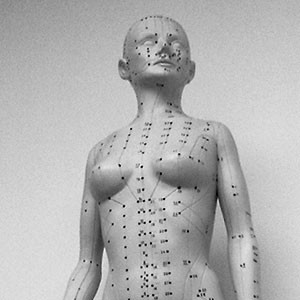 There’s a certain level of mysticism surrounding the ancient holistic practice of acupuncture. Those who haven’t tried it may view it as some sham practice with no real value or benefit. On the other hand, those who have tried are fully aware of its powerful effects on the human body.
#1) There Are Hundreds of Acupuncture Points Throughout The Body
Acupuncture is typically performed on specific points throughout the body, including points both along the meridian and outside the meridian. The number of acupuncture points continues to change on a regular basis, but the latest estimate is around 695 (not including ear treatments). continue reading
Yin & Yang: The Impact Of Connectedness
By Elizabeth Fellows, M.Ac., L.Ac., CHHC
Acupuncturist and Holistic Health Counselor
Director, Center Point Healing
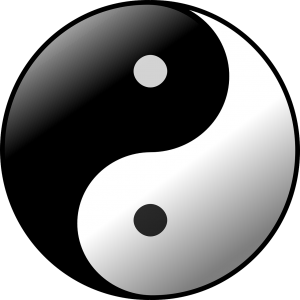 Most people are familiar with the Taijitu symbol, but how many of us understand its meanings?
In Taoist thought, everything that has ever existed, will ever exist and could potentially exist, are part of the infinite nothingness. The number associated with this nothingness/everything-ness is the number one.
The state of one-ness means that everything is connected. Everything that manifests – including each of us – comes from the same source.
As soon as we identify something, we move into the number two. Now we have something and nothing, and distinctions can be made. The Taijitu symbol is known to us as the Yin-Yang symbol. The Chinese characters for yin and yang are the shady side of the mountain and the sunny side of the mountain, respectively.
Yin and yang are often characterized in our culture as “feminine” and “masculine”, but that definition misses out on the richness contained in this symbol. Yin and yang are opposites, but opposites that are interconnected. There is no way to have one without the other. Each gives context to the other: What would day mean if we didn’t have night? What would our experience of warmth be without cold? To understand one, we must understand the other.
We are made up of both yin and yang elements as well. For example, blood is yin, but the electrical conduction that keeps our heart muscle contracting to pump that blood is yang. Generally speaking, our fluids are yin and the processes that move them throughout the body are yang.
Yin and yang can be found in nature also. Yang is more daylight, the growing season, the flurry of activity in the animal kingdom (new babies being born and hatched), the wind and the heat. The seasons of spring and summer are more yang than autumn and winter.
Conversely, yin is more darkness, the harvest and storing seasons, the hibernation and dying back seen in the plant and animal kingdoms, the rain and the cold.
When we experience disease – dis-ease – it is important to check in with what is happening in nature. Are we living in harmony with the laws of nature, or are we trying to subvert them? It is natural to feel more energized in the spring and summer, perhaps to even need less sleep. However, in the autumn and winter, if we listen to our bodies, they will let us know we need more rest and sleep.
It is also natural to be much more active and to do more vigorous types of exercise in the spring and summer – that feeds our yang energy. However, during autumn and winter – the yin times of the year – we may want to turn to different kinds of exercise that supports our yin energy – like yoga.
As we move into Spring, moving from yin to yang, we may notice the stirring of yang energy. Sometimes that movement shows up as headaches, restlessness and irritability. So even though we are moving rapidly out of winter, it is still really important to support our yin by getting plenty of rest, staying warm, eating well and staying well-hydrated.
Lifestyle changes and acupuncture can help you feel to better by balancing your yin and yang energies.
Ways To Ring In The Chinese New Year
 Cleaning
Part of celebrating the Chinese New Year (February 19) involves cleaning. Traditionally, homes are cleaned before the New Year, but sweeping and dusting isn’t done until the third day after New Year out of fear that good fortune will be swept away. The floors can be swept, starting by brushing the dust and dirt towards the middle of the house or building. Once the debris is piled into the center, it’s moved to the corners where it remains until the fifth day, at which point it can be thrown out. continue reading
2015: Year of The Goat
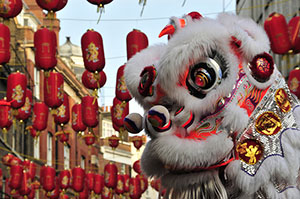 2015 is the Year of The Goat in Chinese astrology. Ranking eighth in the long list of animals tied to the Chinese zodiac, people who are born under this sign are said to be calm, mild-mannered, good-hearted, sympathetic, dependable and intelligent. They also prefer to avoid being the center of attention – a trait that’s rare among other Chinese zodiacs. Of course, this is just the tip of the iceberg when it comes to the characteristics of the Year of The Goat. continue reading
Acupuncture Erases Pain: Here’s How It Works
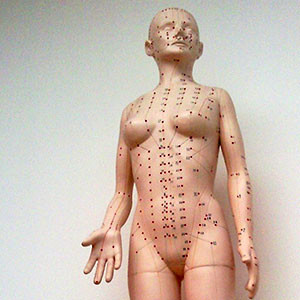 The thought of treating pain by sticking yourself with dozens of tiny needles might sound like a misnomer. After all, wouldn’t this make the problem worse by creating more pain? The holistic practice of acupuncture is a safe and effective solution for relieving pain. Whether it’s chronic or temporary pain, acupuncture has proven effective time and time again at relieving pain. continue reading
Can Acupuncture Really Help You Lose Weight?
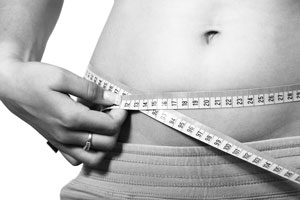 Obesity remains a top concern among health professionals in the U.S. According to a study published in the Journal of American Medicine (JAMA), more than one third of adults in the U.S. are clinically obese (source). People who fall under this category are more likely to develop heart disease, diabetes, and even certain types of cancer.
While there’s no substitution for exercise and a well-balanced diet, the ancient Chinese practice of acupuncture may promote weight loss in adults battling obesity. Numerous studies have reinforced the belief that acupuncture can aid in weight loss. So instead of embarking on a potentially dangerous “fad” diet, such as an all-liquid lemon detox diet, consider acupuncture treatment to assist in your weight loss efforts. continue reading
Tour de France Winner Gains Edge With Acupuncture
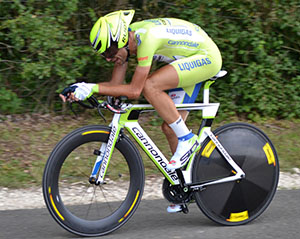
In case you didn’t get the memo, 29-year-old Vincenzo Nibali of Sicily, Italy won the 2014 Tour de France last month. Rightfully known as the “Shark of Messina,” he was able to outperform 218 other cyclists to finish first in the world’s largest bike race. Nabili finished the race with a lead of more than seven minutes, which is the biggest winning margin since 1997.
But here’s something that you probably didn’t know about Nabili and his team: they were the only team at the 2014 Tour de France to bring their own licensed acupuncturist. Throughout the course of the physically enduring race, an acupuncturist treated Nabili and his team, usually twice a day. Nabili and his team would receive a treatment in the morning before they raced and another at night while they were relaxing and resting in the hotel. continue reading
Can Acupuncture Help Treat Depression?
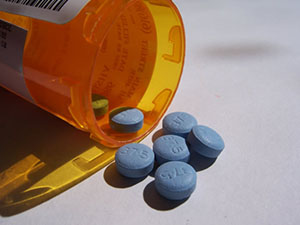 Depression is a serious medical illness that can lower a person’s quality of life while contributing to the onset of symptoms such as headache, insomnia, fatigue, and malnutrition. According to the Centers For Disease Control and Prevention (CDC), nearly 1 in 10 adults in the U.S. say they are depressed. Depression a growing problem that’s often masked with prescription drugs, forcing some to look for alternative forms of treatment.
Most cases of depression are treated with prescription drugs that trigger a range of problems of their own. Fluoxetine, ertraline, paroxetine, fluvoxamine, citalopram, and escitalopram are just a handful of the most frequently prescribed antidepressants, all of which have a long list of adverse side effects. However, researchers are now saying that acupuncture may effectively treat depression in some individuals. continue reading